Sujata Jataka
Sujata Jataka
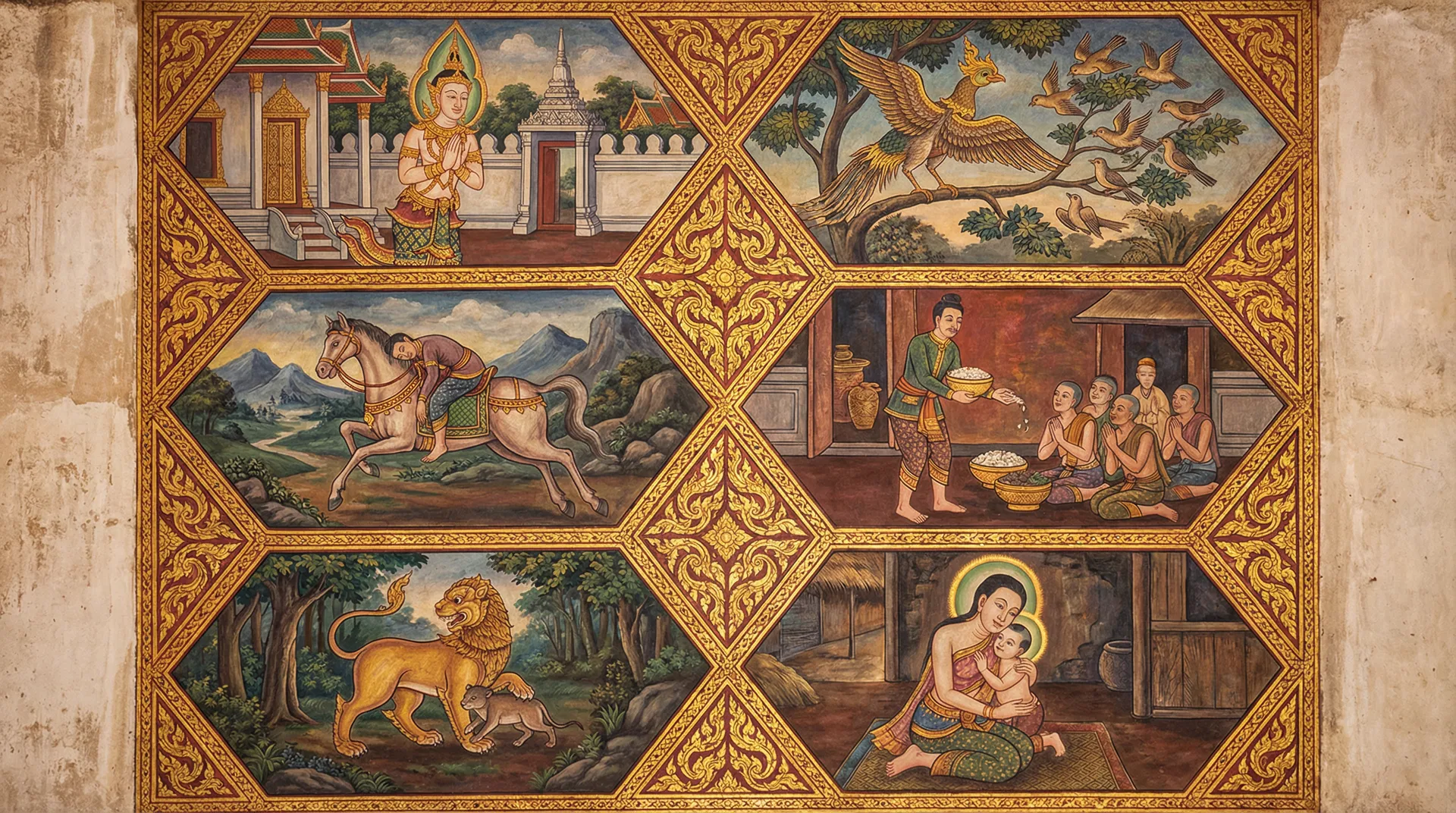
In a bustling city, there lived a young woman named Sujata. She was known throughout the community for her exceptional beauty, her grace, and her kind heart. Sujata came from a respectable family, but her true wealth lay not in her lineage or her possessions, but in her inherent goodness and her unwavering devotion to truth and righteousness. One day, a distinguished nobleman, a man of great repute and influence, sought Sujata's hand in marriage. He was captivated by her charm and her virtuous character, and he showered her with lavish gifts and promises of a life of luxury and comfort. Sujata, being a woman of discerning judgment, carefully considered his proposal. While she appreciated his affection and his generosity, she also observed his character closely. She noticed that he was often swayed by gossip and was quick to judge others based on hearsay. He was also prone to vanity and often sought the admiration of the crowd rather than genuine connection. Sujata, who valued sincerity and integrity above all else, felt a deep unease about marrying him. She understood that a life of outward splendor could not compensate for a lack of inner substance. She gently declined his proposal, explaining that she sought a partner who valued truth and character above all else. The nobleman, unaccustomed to rejection, was deeply offended. He could not comprehend why Sujata would refuse such a seemingly perfect match. Driven by wounded pride and a desire to prove his worth, he began to spread rumors about Sujata, subtly undermining her reputation. He told people that she was arrogant, ungrateful, and that her refusal was a sign of her foolishness. These rumors, though baseless, began to take root in the minds of some people. Sujata, hearing about the whispers and the damaging gossip, felt a pang of sadness. However, she did not retaliate or engage in counter-rumors. She understood that the truth would eventually prevail, and that stooping to the level of her accuser would only tarnish her own integrity. Instead, she focused on living her life with even greater diligence and virtue. She continued to be kind to everyone she met, to speak truthfully, and to act with integrity in all her dealings. She found solace in her own conscience and the support of her true friends, those who knew her character well. One day, a wise old sage, who had heard of the rumors circulating about Sujata, decided to visit her. He observed her closely, witnessing her unwavering composure, her gentle demeanor, and her consistent acts of kindness. He saw that she was not perturbed by the gossip, but rather focused on living a life of principle. The sage, impressed by her resilience and her inner strength, approached her. 'Young woman,' he said, 'I have heard much about you, both good and ill. But I have seen with my own eyes the truth of your character. Your silence in the face of slander speaks volumes. You understand that true worth is not measured by the opinions of others, but by the integrity of one's own actions.' Sujata, humbled by the sage's recognition, bowed her head. 'Venerable Sir,' she replied, 'I believe that truth is like a lamp; it may be temporarily covered by darkness, but its light will eventually shine through. I have no desire to engage in falsehoods or to defend myself with anger. My peace comes from knowing that I strive to live truthfully.' The sage nodded in approval. 'You possess a rare wisdom, Sujata. Your understanding of the Dharma, your commitment to truth, and your ability to remain serene amidst adversity are truly commendable.' He then turned his attention to the nobleman who had spread the rumors. The sage, using his spiritual insight, saw the nobleman's own insecurities and his misguided pursuit of external validation. He approached the nobleman and spoke to him directly, not with condemnation, but with gentle guidance. He explained how his actions were driven by ego and a misunderstanding of true happiness. He pointed out that genuine respect and admiration are earned through character, not forced through manipulation or slander. The nobleman, confronted by the sage's wisdom and his own inner turmoil, began to reflect deeply on his behavior. He realized the shallowness of his actions and the harm he had caused. He saw that his pursuit of reputation had led him to compromise his own integrity. Humbled, he sought out Sujata and apologized for his baseless accusations and his hurtful words. Sujata, with her characteristic grace and forgiveness, accepted his apology. She understood that he too was on a path of learning. The nobleman, truly remorseful, dedicated himself to cultivating genuine virtues and living a life of integrity. He learned that true respect comes from within and from honest actions, not from the fleeting opinions of others. Sujata's story became a beautiful testament to the power of truth, integrity, and inner strength. It showed that even in the face of slander and adversity, a virtuous heart and a commitment to truth will ultimately shine through, earning genuine respect and lasting peace.
Truth, integrity, and inner strength are the most valuable assets. They can withstand the storms of slander and ultimately prevail.
— In-Article Ad —
💡Moral of the Story
Truth and integrity are paramount. Even in the face of slander, a virtuous character will ultimately shine through.
Perfection: Truthfulness (Sacca)
— Ad Space (728x90) —
More Jataka Tales You May Enjoy
 132Ekanipāta
Kuddala Jataka
The Tale of the Weaver's Son Long ago, in the bustling city of Savatthi, renowned for its vibrant ma...
💡 A truly prosperous kingdom is one where the well-being of its poorest citizens is a priority, and where systematic compassion is integrated into governance.
 178Dukanipāta
Mūgapakkha Jātaka
Mūgapakkha JātakaIn the bustling city of Varanasi, renowned for its vibrant arts and thriving commer...
💡 True wisdom is not always expressed through eloquent words. Deep observation, keen discernment, and insightful actions can reveal truths that speech may conceal. Silence can be a powerful medium for conveying profound understanding.
 373Pañcakanipāta
Virochana Jātaka
Virochana JātakaIn the magnificent city of Mithila, ruled a king named Vidhura, a monarch whose reig...
💡 True power resides not in external possessions or magical artifacts, but in inner wisdom, self-control, and freedom from attachment.
218DukanipātaMasa Jataka
Masa JatakaIn a serene monastery nestled amidst rolling hills, lived a devout monk named Bodhisattva...
💡 Attachment to desires and possessions leads to suffering. True contentment comes from inner peace and detachment, not from external things.
171DukanipātaMahīsosaka Jātaka
Mahīsosaka JātakaIn the ancient kingdom of Mithila, nestled amongst rolling hills and verdant forest...
💡 True loyalty and affection cannot be bought or coerced. The worth of a creature, or a person, is not determined by external forces but by their inner spirit and their bonds with those who truly care for them.
 483Terasanipāta
Somanassa Jātaka
The Tale of the King of the Gods and the Benevolent King In the celestial realm of Tavatimsa, ruled ...
💡 Boundless compassion and selflessness, even in the face of extreme adversity, are the hallmarks of true virtue and leadership.
— Multiplex Ad —